Alyssa Forman | UX/UI Case Study | 2026
Mop
Time Frame
3 months
Skills
UX/UI
Research
Branding
Marketing

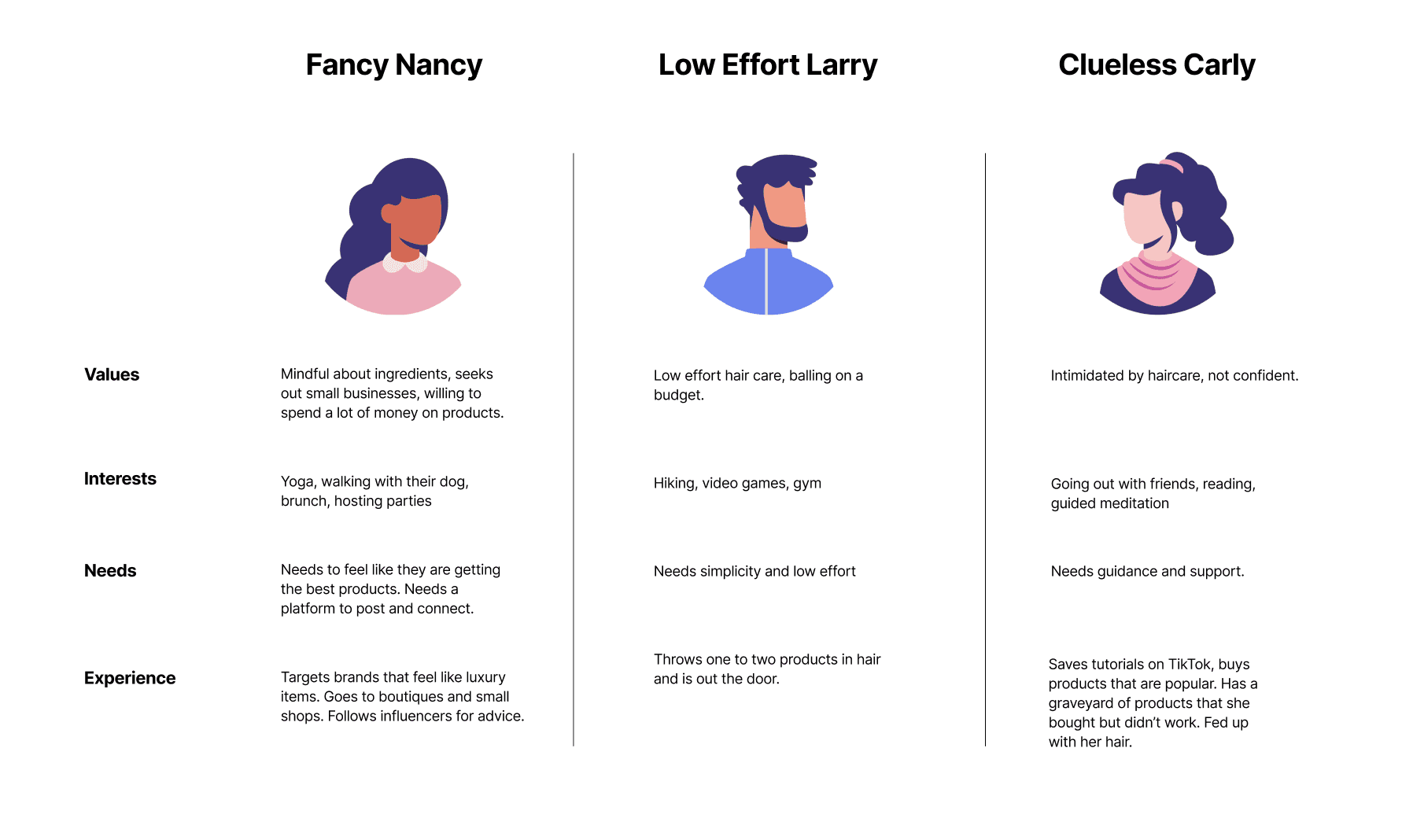
USER PSYCHOGRAPHIC
Key Feature | AI-Profile Builder
I wanted to explore how AI could enhance an app like Mop without losing the trust and personalization that users were looking for. Throughout user interviews, people repeatedly described wanting their own “hair assistant”—something that understood their hair history, hair type, preferences, and routines, and could provide personalized answers without requiring them to start from scratch every time.
AI felt like a natural solution to this need, but introducing it also raised an important design challenge: How do you make AI feel trustworthy when users are concerned about inaccurate or incorrect information?
Rather than overlooking this concern, I designed around it. I reimagined Mop’s onboarding experience to make the information AI uses feel transparent and user-controlled. After completing a short hair profile quiz, users are shown a series of summary cards that reflect back the information Mop has collected about their hair, preferences, and needs.
By giving users the opportunity to see and confirm what Mop knows about them, the experience establishes trust before introducing AI-powered recommendations. The result is an AI experience that feels less like a black box and more like a personalized hair assistant that users can understand and confidently rely on.


Key Feature | Showing the Why
As I moved into early rounds of user testing, a new question emerged: users wanted to understand why specific products were being recommended to them. It wasn’t enough for Mop to know their hair profile—the recommendations needed to feel intentional and relevant.
I explored different ways to make the connection between a user’s needs and each recommendation more visible. The final design pairs a highlight section, which surfaces the product’s most relevant features, with a recommendation section that explains how those features align with the user’s hair profile.
This gives users the context behind each recommendation, turning a product suggestion into something they can evaluate for themselves.